
As a company with extensive experience in conservatory design, we understand the old stereotype that conservatories are chilly in January and stifling in July. However, we also know that comfort is a design choice. With the right glazing, roof, airtightness, and heating controls, a conservatory or orangery can feel like a proper room all year round. We will show you how, with simple language, clear checks, and credible sources.
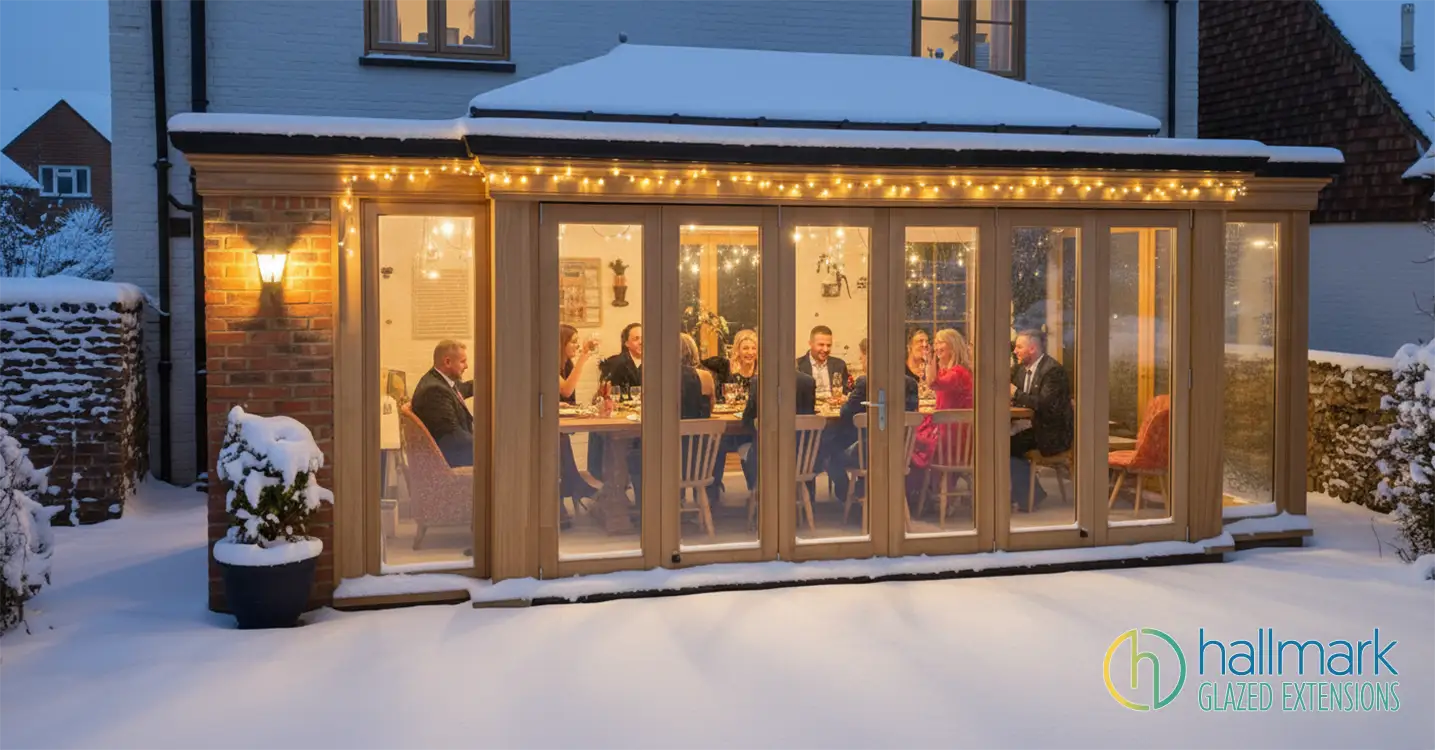
A modern conservatory is not cold in winter if it has energy-efficient glazing, an insulated roof, reasonable draught control, and innovative heating that is zoned and independently controlled. That is how we design. That is why our clients use their rooms throughout the winter.
Why did older conservatories feel cold?

Modern specifications solve each of these pain points. Energy-efficient glazing reduces heat loss and cold spots, while better-insulated roofs or modern, efficient solar control glass keep warmth where you need it.
What U-values should I look for?
U-values tell you how quickly heat passes through a building element. Lower is better. As a guide, a u-value of 0.0 means no heat loss through the material. Current guidance for existing homes sets a limiting U-value of 1.4 W/m²K for replacement windows and many glazed doors, with 2.2 W/m²K for rooflights. New build notional targets are even tighter at around 1.2 W/m²K for windows. This is why we specify high-performance frames and glass with a centre pane u-value of 1.0 W/m²K as standard.
Do I need doors between my house and conservatory?
No. However, most conservatories are exempt from full Building Regulations when they are under 30 m², thermally separated from the house with external grade doors or windows, and have independent heating with separate on and off controls and at least 75% of the roof is glazed. If you remove that thermal separation or extend your central heating into the space without independent controls, the exemption can be lost, and compliance duties change. We handle this for you during the design process, ensuring you stay on the right side of the rules.
Will a warm roof or tiled roof make it usable year-round?
Replacing a translucent roof with a solid, insulated system is one of the most significant and often practical winter comfort upgrades. Having a roof less than 75% glazed changes the regulatory picture. LABC guidance is clear that roofing to a solid roof is building work that needs a Building Regulations application to check the structure and thermal performance. We only propose systems and details that are designed for the loads and that meet the thermal requirements.

What does the glass actually do in winter?
Energy-efficient glazing does two essential jobs in cold weather:
- 1Low-emissivity coatings (Low-e) reflect heat back into the room
- 2Solar Control Glass reflects unwanted heat on hot days and can have a low u-value, keeping the heat in on a cold day
- 3High specification double or triple-glazed units reduce cold spots and condensation risk
Around 18 per cent of a home’s heat can be lost through windows, so better glazing and frames are not just about comfort. They are a sensible way to reduce energy waste.
Why roofs matter so much
An uninsulated home can lose about 25 per cent of its heat through the roof. That is why insulated roof build-ups or approved warm roof systems transform winter usability. We combine this with careful airtightness and ventilation detailing, so you get warmth without stuffiness. Modern high specification Solar Control Glass can be used in glazed extension roofs and still be comfortable to use all year round.
Are orangeries warmer than fully glazed conservatories?
Often yes. Orangeries include more solid walls and roof sections, which makes it easier to achieve low U-values and stable temperatures. We will show you options side by side and specify the build-up that suits your home, budget, and preferred look.

Heating: Is underfloor heating worth it?
Underfloor heating gives an even temperature and keeps surfaces warm underfoot. It works exceptionally well with independent controls, so you only heat the space when you use it. The key is zoning. Keep controls separate from the main house to stay efficient and to keep the usual exemption intact when that is the goal.
The five design levers we use to keep winter warmth in
- High spec glazing and frames
- We design to exceed the current Part L benchmarks, selecting low U-value glass, warm-edge spacers, and thermally broken frames.
- Insulated roof structures
- Airtightness with controlled ventilation
- Precision installation and seals limit draughts, while trickle ventilation and openers manage air quality.
- Thermal separation and smart, zoned heating
- Glass tuned for the season
- Low-e coatings keep heat in during winter. Optional solar control options can cut unwanted summer gain.
What about the rules right now?
Spec checklist for a warm winter conservatory
Each of these points links directly to comfort and efficiency. We explain the trade-offs in plain English during your design consultation.
Cost smart upgrades for older spaces
If you already have a conservatory that feels tired in winter, we typically look at:
LABC guidance is our north star on any roof change, and we handle approvals so you do not have to.
What this means for your bills and comfort
Better glazing and frames reduce heat loss through glass, which can account for a meaningful share of your home’s heat loss. Insulating the roof correctly also has a significant impact, as roofs are a major route for heat to escape. You get fewer cold spots, less condensation risk and a room you actually want to sit in during winter.
How we work
We discuss your goals, survey the existing structure, and propose a specification that balances aesthetics and performance. We explain U-values in simple terms, handle any Building Regulations applications where needed, and manage the details that make the difference in January.
If a conservatory ever felt cold in winter, it was down to old specs, not the idea itself. With the right glazing, insulated roof structure, airtightness and smart, independent heating controls, a conservatory or orangery becomes a calm, comfortable room you will use in January as much as July. That is precisely how we design.
We will guide you through the right U-values, glazing options, roof styles and controls for your home. We also handle Building Regulations where needed, so the process stays simple and the result feels like it has always belonged.
Ready to design a winter-happy space?
Book a free design consultation and we will show you the exact mix of glass, roof styles and controls that make a conservatory feel like an actual living room in winter.
Ready to talk about your project?
Hallmark Glazed Extensions
Call: 01323 671007
Are conservatories in winter cold? FAQs.
1) Are conservatories still cold in winter, or is that an old myth?
It is an old myth. Modern glazing, insulated roof structures and reasonable draught control make a huge difference. We design to those standards as a baseline.
2) What is the quickest way to make an older conservatory warmer?
Upgrade the roof to an approved insulated system or a high-performance glazed roof, then improve frame glazing and seals.
3) Do I need doors between the house and conservatory?
No. However, Thermal separation usually keeps you in the simple “exempt” route and helps with comfort and efficiency. We will advise the best approach for your layout.
4) Should I choose double or triple glazing?
High-spec double glazing often strikes the best balance of performance, weight, and cost. We only use triple glazing where it makes sense for orientation, noise or specific targets.
5) Will a tiled or warm roof make the most significant difference in winter?
For many older spaces, yes. A compliant warm roof cuts heat loss and reduces cold surfaces. Where a glazed roof is preferred, we use insulated frames and high-performance units.
6) Is underfloor heating worth it in a conservatory?
Yes, if it is independently controlled. It gives even warmth and is efficient when set up correctly. We will size and specify it for your space.
7) Do I need planning permission to upgrade my roof?
Not normally, unless it is a Listed property or in a conservation area. Usually, it is Building Regulations, not planning. Solid roof conversions are building work that needs sign-off. We handle the approvals and structural checks on your behalf.
8) What U-values should I be aiming for?
As a guide, a centre pane U-value of 1.0 W/m²K, with roof styles designed for low U-values, is also recommended. We will confirm the right targets for your project.
9) How do you stop condensation and cold spots?
We combine energy-efficient glazing, warm-edge spacers, good seals and controlled ventilation. That keeps glass surfaces warmer and the air fresher.
10) Can an orangery be warmer than a fully glazed conservatory?
Often yes. The extra insulated structure makes stable temperatures easier to achieve. We will show you both options and price them clearly so you can compare.
