
Dispelling the Myth of Conservatories Being Too Hot or Too Cold

In the current climate, where energy bills are ever increasing, one of our customers' main concerns is the energy efficiency of their conservatory.
There is a commonly held misconception that a conservatory will likely be too hot in summer and too cold in winter, reducing its usability and value as a home extension.
Whilst older conservatories struggle to regulate the temperature of the room, advancements in the materials and glazing technologies available for conservatories have resolved these concerns.
Which Glass is Right for Your Project?
When it comes to energy efficiency in conservatories, the specifications of the glass and ventilation are vital.
Before 2000, Solar Control glass was not readily available for domestic properties. Polycarbonate sheet roofing or standard clear glass was often used, sometimes with bronze anti-sun glass.
None of these options were particularly energy-efficient or elegant. With solar control glass becoming more accessible to the domestic market, glazing options for conservatories are now much more sophisticated.
Keeping draughts out and maintaining comfortable temperatures inside your conservatory is now a breeze!
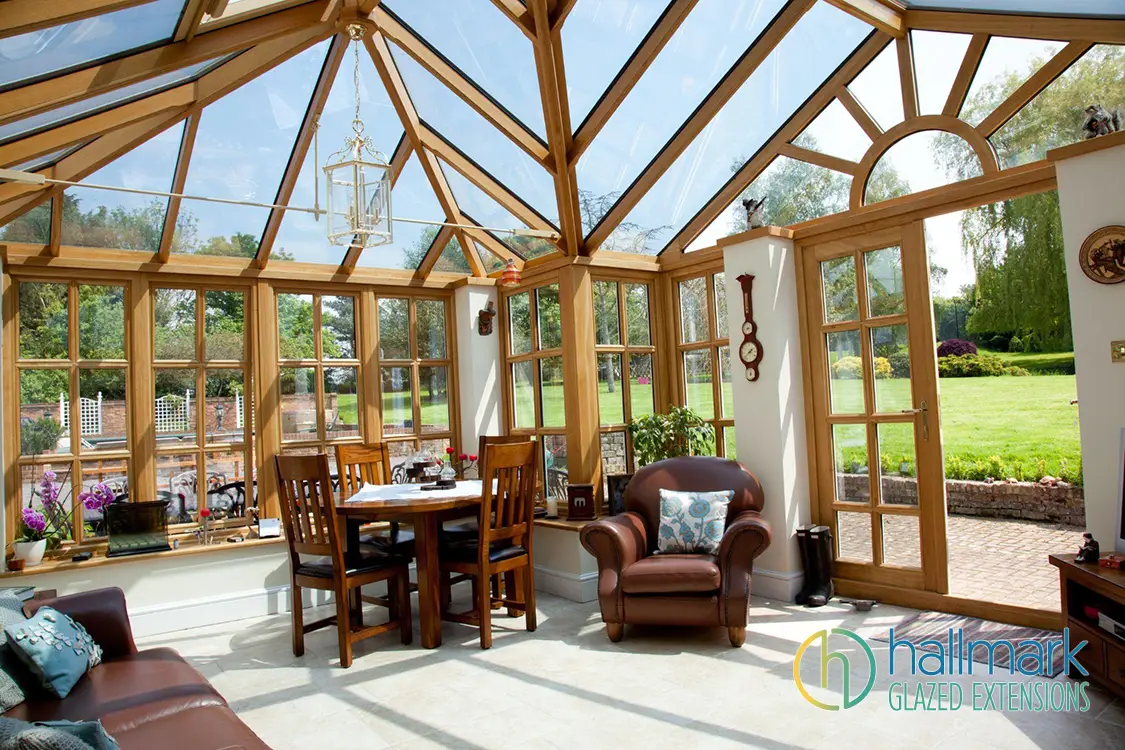
Modern Glazing
Modern double glazing has revolutionised the energy efficiency of glass and has been mandatory in all domestic residences since 2002.
At least one of the panes of glass in double-glazed windows will have a Low-Emissivity (Low-E) coating, which helps to keep harmful rays out and reduce heat loss through the glass, allowing you to control the temperature of your home.
Less reputable conservatory installers may encourage using cheaper, less energy-efficient glazing and materials, but these won't provide an optimal extension to your home.
Understanding what materials your Hallmark Glazed Extensions conservatory designer is proposing to use and how to measure the energy efficiency of your conservatory can help you make an informed decision and ensure your modern conservatory maximises your living space all year round.

How can we Measure the Energy Efficiency of a Conservatory?
A pivotal measurement to be aware of is the glass U-value. This value measures the amount of heat loss (kilowatts) per square metre of glass per hour.
The lower the U-value, the more efficient the ability to retain heat in the property.
For example, a single-glazed unit might have a U-value of around 6.0, whereas the best double-glazing on the market might have a U-value as low as 1.0.
The importance of a lower U-value depends on how much natural light the room gets.
For example, a lower U-value will be more important in a north-facing conservatory. As a glazing unit's energy efficiency increases, so does the price.
Getting the best triple glazing for your new conservatory may not pay, as the additional cost won't necessarily equate to energy savings.
We can use a sophisticated calculation to help guide us on the optimal glazing quality for any specific space, considering the room's intended usage, the total amount of glass in the space and the existing and predicted energy efficiency of the home.
Most conservatory glass has a U-value between 1.2 and 1.4. At Hallmark, our standard options for glass roofs and windows have a U-value of 1.0, and our minimum option has a U-value of 1.2, which ensures an energy-efficient conservatory.
The minimum option is only available where the U-value 1.0 version is logistically impractical.
Frame Materials Which Contribute to an Energy-Efficient Conservatory
Selecting https://hallmarkglazedextensions.co.uk/pros-and-cons-of-materials-for-conservatory-frames/quality frame materials when replacing your existing conservatory is essential to an energy-efficient conservatory. At Hallmark, we offer quality frame options:
Hallmark Glazed Extensions specialises in building high-quality, elegant and energy-efficient conservatories and orangeries.
Whichever frame materials you decide on for your glazed home extension, you can rest assured that our experts will protect the energy efficiency of your conservatory and your home, providing you with a beautiful and valuable extension that is comfortable all year round.
Ensure you remain cool in summer and warm in winter by calling our friendly, design team, who can guide you through the process.
