
What is the Cost of a Hardwood Conservatory?
When considering the cost of a hardwood conservatory, many factors come into play, making it a question with no one-size-fits-all answer. Considerations such as size, finish, property-specific needs, and the purpose behind the extension all contribute to the final price tag.
While it's crucial to budget wisely for your extension project, viewing it as an investment is equally essential. Whether you opt for a modern seasoned oak conservatory, a hardwood orangery, or a wooden conservatory, any timber-framed glazed extension will invariably enhance the value of your home.
Each wooden conservatory is unique. Each project we undertake is entirely bespoke and tailored to meet the specific requirements of our clients. This customisation means that costs can vary significantly depending on individual preferences and needs.
One of the primary benefits of glazed extensions is creating an additional living space, which often becomes a focal point within the home. Our clients frequently express how their glazed extensions serve as inviting areas for family gatherings and relaxation, adding a significant 'Wow' factor to their properties.

Understanding Timber Choices for Conservatory Frames
Selecting suitable materials for your glazed extension is crucial as it can significantly influence your project's appearance, feel, and overall cost. Typically, three primary materials are used in building extensions: uPVC, aluminium, or wood. In this blog, we shall focus on painted hardwood glazed extensions.
Hardwood: Superior Durability and Longevity
Wooden or timber conservatories are the most expensive option. While softwoods, such as European Redwood (Pine) and Siberian Larch, may seem appealing due to their lower price points, they often require replacement within 7 to 15 years due to wear and tear and weather damage. In contrast, high-quality hardwoods, including Sapele, Iroko, and Idigbo, are more durable and long-lasting.
Hallmark Glazed Extensions only uses superior-quality hardwood for our timber-framed conservatories. We exclusively use fully seasoned oak for our high-end conservatories, prioritising longevity, quality and style. Common hardwoods like Idigbo or Sapele are available for more budget-friendly options and can be finished in different tones and colours.
Considerations for Extension Type
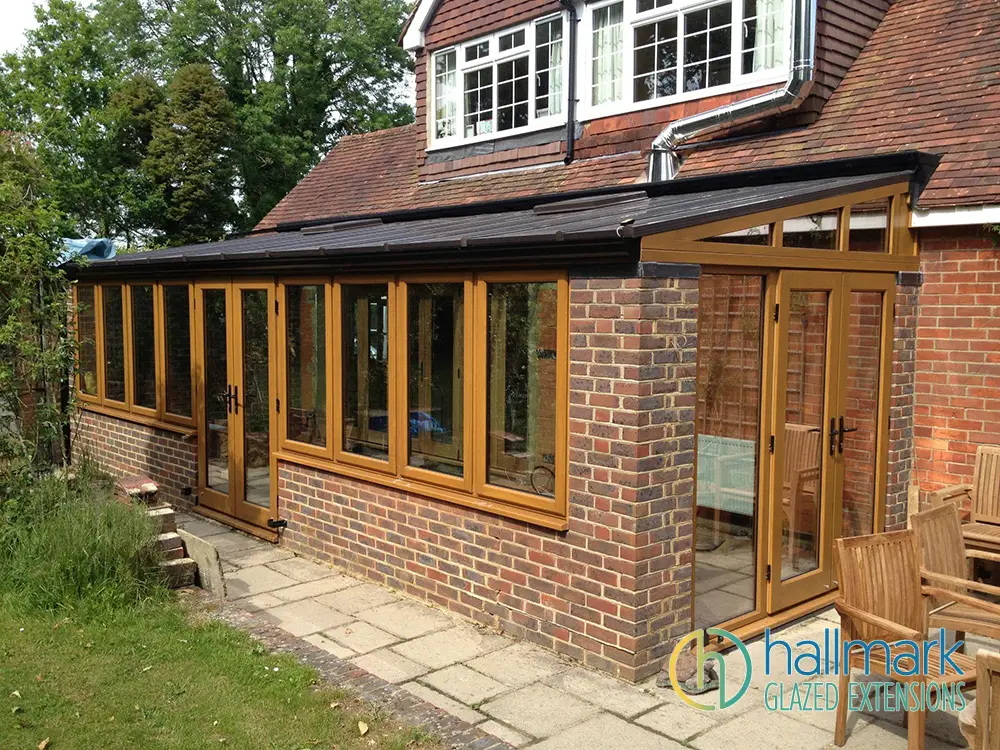
Another crucial factor to consider is the type of extension you envision and the design specifications you choose. For example, an orangery can feature a flat roof with a lantern or a tiled verge with a lantern atop a raised roof, commonly called mansard orangery. Equally, your selection of windows and door specifications can significantly affect the overall price. Your garden doors might be high-specification bi-folding doors or standard patio doors. These design decisions directly impact the cost of your project.
Enhancing Comfort with Conservatory Glazing
Today, a conservatory or glazed extension serves as more than just a space for cultivating plants; it's a living area that integrates seamlessly with the rest of the home. With this evolution in function, maintaining comfortable temperatures within the new extension throughout the year becomes essential for its usability and enjoyment.
The type of glazing used in your extension plays a pivotal role in regulating temperatures, ensuring that it remains cool in the summer and warm in the winter. It's crucial to consider the impact of glazing specifications to achieve optimal comfort levels for your new space.

It's important to note that unless the work is conducted "subject to building regulations," no specific regulations govern the efficiency of glass in exempt buildings. While all glass must comply with safety standards outlined in Building Regulations Document 'L', these standards primarily focus on using safety glass, omitting to cover factors like solar control, which are crucial in a glazed room.
Challenges with Existing Glazing
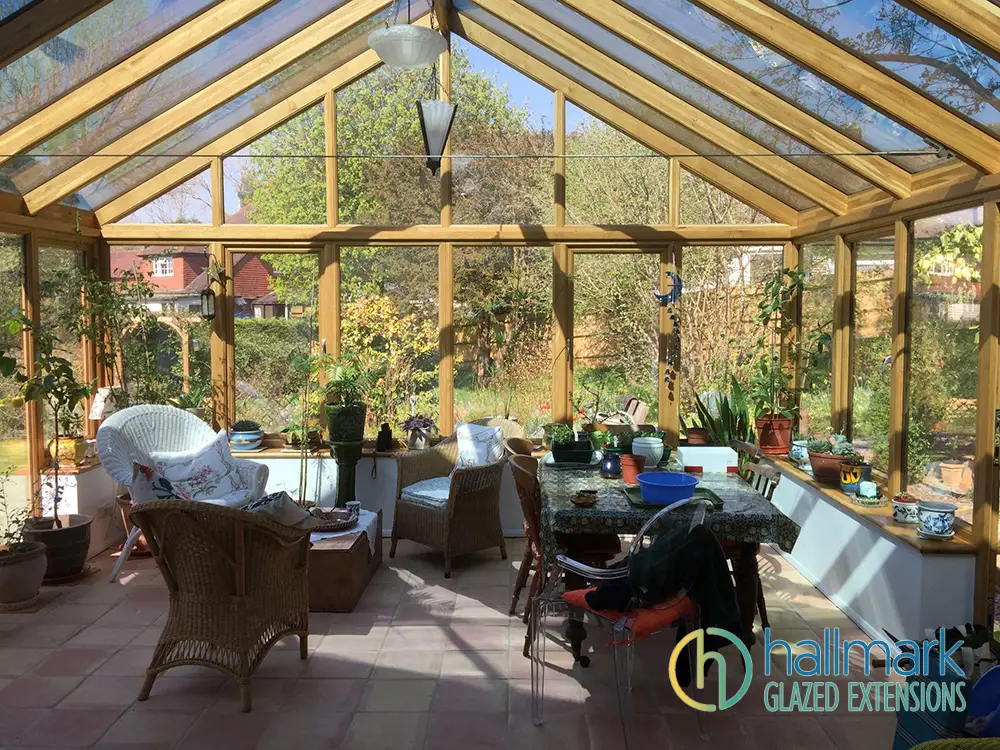
Many conservatories built before the introduction of solar control glass in 2000 often suffer from inadequate glazing and ventilation. Subsequently, these spaces may become uncomfortable due to excessive heat or cold, leading to inquiries for glass replacement or additional ventilation.
Glass specification is essential in ensuring your hardwood conservatory is comfortable all year round, especially for south- or west-facing extensions. Solar control glass for the roof and vertical frames can significantly reduce heat gain, while double-glazed roof glass with high insulation values enhances thermal efficiency.
Ventilation Solutions
Roof ventilation is essential for effective temperature regulation, especially in extensions not shaded by the building. Roof vents allow warm air to escape, creating a refreshing breeze on hot days. Opting for automatic opening roof vents with climate control ensures convenient and efficient ventilation, enhancing comfort levels within the space.
A Word on Triple Glazing
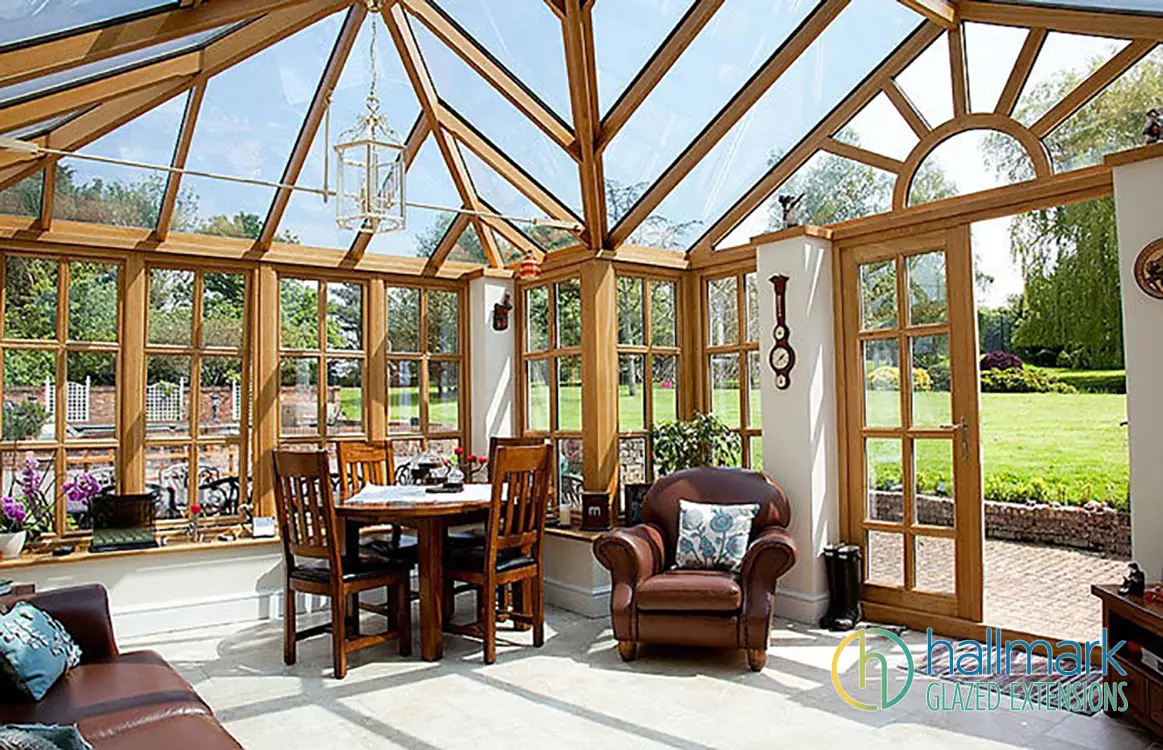
While triple glazing may seem appealing for its potential insulation benefits, the added cost and weight may not justify the minimal efficiency gains compared to double glazing. It's essential to weigh the benefits against the expenses before committing to this option.
Factors Influencing Overall Cost of Conservatory Design
When considering the price of your conservatory, in addition to material choice, several factors come into play that can impact the overall cost. Here are some key considerations to keep in mind:
a) Complexity of Design
In general, the complexity of the design directly affects the manufacturing and installation time, thus influencing the cost. Intricate designs may require more labour and materials, resulting in higher expenses.
b) Location and Orientation
The location of the new work can also influence the cost. For instance, if your extension is positioned in a corner, it may only require construction on two sides instead of three, potentially reducing costs. However, cutting into low-eave roofs or needing structural box gutters could offset initial savings.
c) Size of the Conservatory
The size of the conservatory directly impacts the cost, with larger structures generally costing more. However, more significant extensions often offer a lower price per square metre of building size. It's important to note that huge buildings may require particular structural work, which can add to the overall expense.
d) Frame Design
The design of the frame can also influence costs. Like modern casement windows, direct glazed frames may be more cost-effective than fixed panes glazed into dummy sashes. However, the latter option may be necessary for aesthetic reasons or due to requirements for Listed Properties, albeit at a higher cost.
e) Roof Complexity
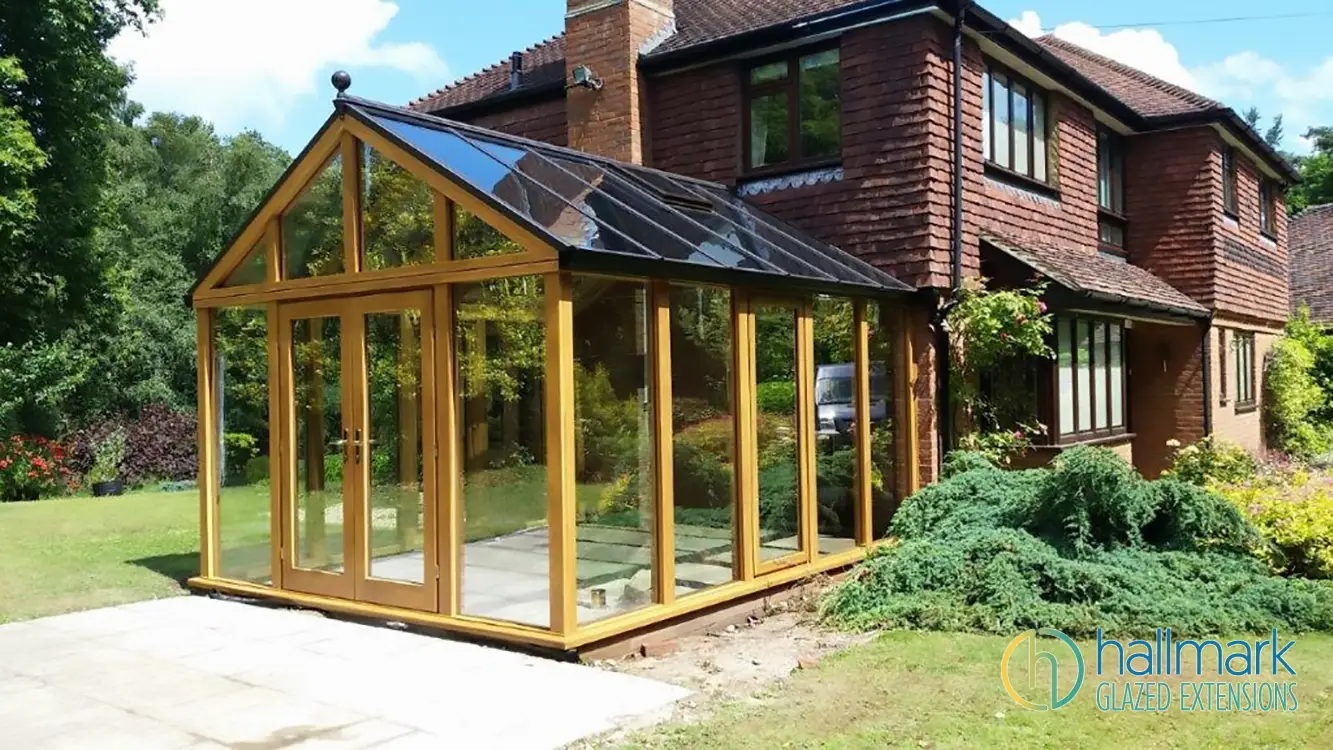
The complexity of the roof design plays a significant role in determining cost. While single-pitch roofs, such as lean-tos, are typically the least expensive, designs with multiple facets, hips, valleys, or gables can substantially increase costs.
Location and Ground Conditions
Site conditions, such as sloping terrain or trees within 14 metres of the new work, can also impact costs before constructing frames. Additionally, assumptions about the location, such as being on a level site with the house floor level within a certain distance from the ground, can affect pricing considerations.
By considering these factors when planning your conservatory design, you can better anticipate costs and ensure that your project stays within budget.
Crafting and Installing Your Glazed Extension
Labour and installation costs significantly determine the overall price of your new extension. The intricacies of manufacturing and fitting various components contribute to the total expense, regardless of the extension's size or dimensions.
For example, the process of creating rafters involves:
Whether a rafter is 1 or 4 metres long, the manufacturing process remains largely the same, with the primary difference being the material cost. This principle applies to nearly every part of a conservatory, where deeper or wider dimensions may increase material content but not necessarily manufacturing or fitting time.
Similarly, groundwork is typically completed within a day, assuming a flat, level site. The process remains consistent whether excavating footings for a small porch or an open plan kitchen dining room. The building team will pour the concrete the following day and leave it to set.
Price Guide for Building Work and Conservatory Full Build
The price of building work for a conservatory, depending on size, including foundations, insulated base, brickwork, excluding underfloor heating, and floor tiling, all to building regulations standards, is typically between £1200 and £1800, including VAT, per square metre. This does not include knock throughs & steelwork if required for an open plan design to an existing room.
For a full build example, a premium quality 4m x 3m Seasoned Oak Lean to conservatory including design concepts, frames, high spec solar control glazing, installation and associated building work, excluding flooring and under-floor heating floor heating, will realistically cost from £60,000. A 5m x 3m Seasoned Oak orangery design will realistically be £85,000. A glazed extension based on the same sizes and design type but built in an alternative frame material will cost less, for example, Sapele will be about 8-10% less than oak, Aluminium 15-20% less than oak and uPVC 25%-30% less than oak.
Conclusion
Understanding the pricing factors of a glazed extension is essential for making informed decisions. While providing an exact cost for a hardwood conservatory may be challenging, a comprehensive design consultation can provide a detailed proposal tailored to your specific requirements.
To schedule a design and site consultation, please get in touch with us at 01323 671007. Our expert team is ready to advise you on your potential project and help bring your vision to life. If you have any questions or would like to discuss your project further, request a callback with our design team, and we'll be happy to assist you.
