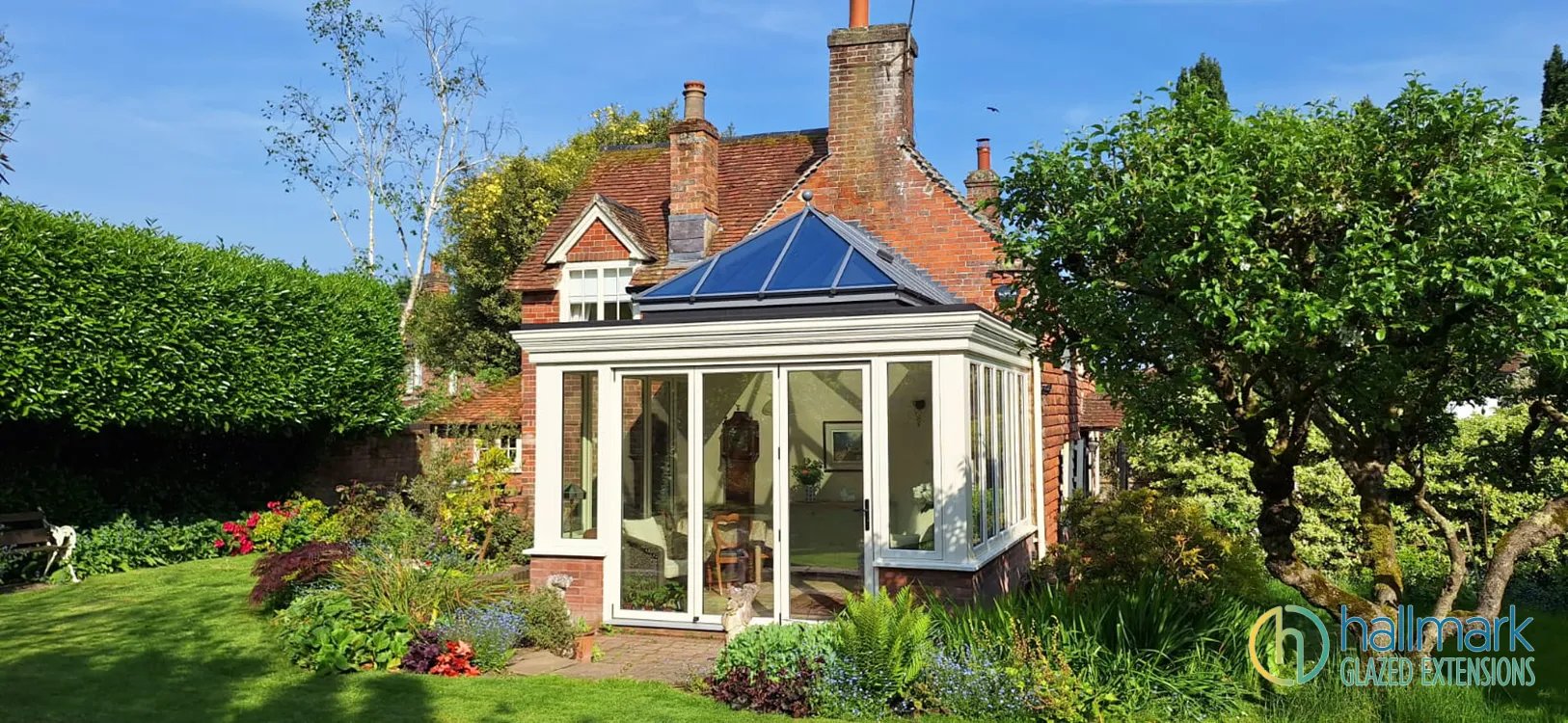
Expanding your living space with a conservatory is exciting, but understanding the necessary building regulations can be daunting.
Below, we clarify whether you'll need building regulations for your conservatory project and offer guidance on effectively navigating these regulations.

Determining the Need for Building Regulations
Building regulations become pertinent when extending your home. Seeking approval from your local authority's building control team ensures adherence to safety standards and regulations. Generally, conservatories are exempt from building regulations if they meet specific criteria, as outlined below.
Guidelines for Conservatory Building Regulations
Typically, a glazed conservatory is exempt from building regulations if it fulfils the following conditions:
If you need more certainty about your conservatory's compliance with building regulations, our team can provide guidance and assistance.
Application of Energy, Electrical, and Glazing Regulations
Efficiency is paramount in conservatory design, necessitating adherence to energy, electrical, and glazing regulations. Compliance includes:

Updates on New Rules for Conservatories
Recent additions to building regulations, namely Part F and Part O, aim to minimise emissions and prevent overheating in homes.
These rules impact conservatories larger than 30 square meters, necessitating ventilation systems to mitigate solar gains and excess heat.
Considerations for Existing Conservatories and New Builds
Existing conservatories are subject to new regulations if renovations or extensions occur after specific dates.
Conversely, new builds may install conservatories without building regulations approval under certain conditions, including effective management of solar gains.
Contact our knowledgeable team for comprehensive guidance tailored to your project's requirements.
Understanding and adhering to conservatory building regulations is essential for ensuring your extension project's safety, efficiency, and compliance.
With our expertise and support, you can work out these if any of the regulations apply to you, transforming your conservatory vision into a reality that enhances your living space while meeting regulatory standards.

Conservatories Frequently Asked Questions
What conditions must a conservatory meet to be exempt from Building Regulations?
To be exempt from Building Regulations, a conservatory or porch must meet the following conditions:
- Be at ground level
- Not exceed 30 m² in floor area
- Comply with glazing regulations Parts K4, K 5.1, K 5.2, K 5.3, and K 5.4 of Schedule 1
- Maintain thermal separation from the main building
- Not have the main building’s heating system extended into it
What does thermal separation mean for a conservatory?
Thermal separation refers to maintaining a clear division between the conservatory and the main building's heated space.
This ensures that the energy efficiency of the main building is not compromised.
Can I extend my home’s heating system into my conservatory?
No, extending your home’s heating system into the conservatory or porch would invalidate the exemption from Building Regulations. The heating system must be separate.
What glazing requirements must be met for an exempt conservatory or porch?
The glazing must comply with Parts K4, K 5.1, K 5.2, K 5.3, and K 5.4 of Schedule 1. These parts cover safety, protection against impact, and energy efficiency standards
Are there any regulations regarding electrical systems in an exempt conservatory?
Yes, if the dwelling’s electrical system is extended into the conservatory or porch, the installation must comply with Part P of Schedule 1 (Regulation 9(3)), ensuring safety standards are met.
What about extending water supply systems into an exempt conservatory?
Extending the building’s hot or cold water supply into the conservatory or porch must comply with the relevant requirements of Part G of Schedule 1 (Regulation 9(2)).
Can I carry out additional work on my exempt conservatory after installation?
Yes, further work on or in connection with an exempt conservatory or porch is generally also exempt from Building Regulations. However, such work must not change the conservatory to a non-exempt status.
What could cause a conservatory to lose its exemption from Building Regulations?
Adding a heating system, removing thermal separation, or significantly reducing the amount of glazing in the walls or roof could cause the extension to lose its exempt status.
What happens if my conservatory loses its exempt status?
If your conservatory or porch is no longer exempt, it must comply with all applicable requirements of Schedule 1 (regulation 4(1)). The structure must not be more unsatisfactory in relation to these requirements than before the additional work was carried out.
How can I ensure my conservatory remains compliant with Building Regulations?
Consult with your local building control body to ensure that any planned work adheres to the required standards and does not affect your conservatory's exempt status.
For more assistance with the FAQs, please contact our friendly team, who will guide you through the process and make it simple for you.