
Adding a glazed extension is one of the most exciting ways to improve your home, but it also comes with a long list of questions.
Over the last two months, we’ve spoken to many homeowners across the South East and compiled the 20 most common questions they’ve asked us about orangeries, conservatories, planning permission, materials and comfort.
This blog brings together real homeowner queries with detailed, educational answers drawn from years of experience. Whether you're just starting your journey or finalising decisions, this is your go-to guide.
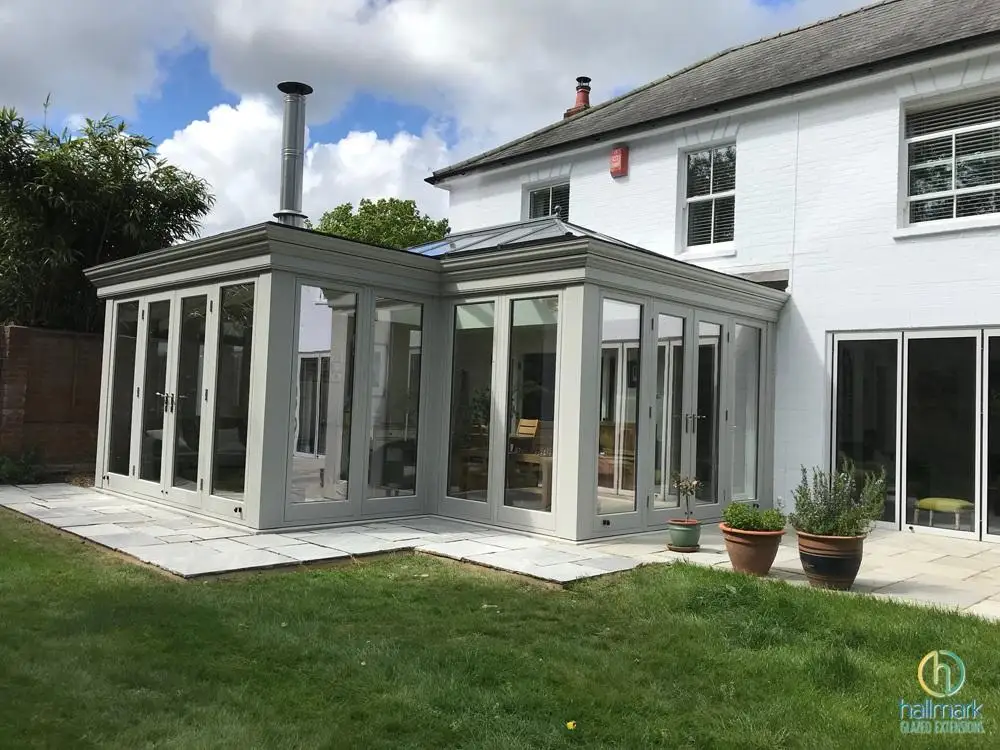
1. What’s the difference between an orangery and a conservatory?
This is one of the most common questions we hear and a crucial one to understand before starting your design journey. While both are popular ways to add space and value to your home, they differ significantly in structure, appearance, and performance.
Conservatory
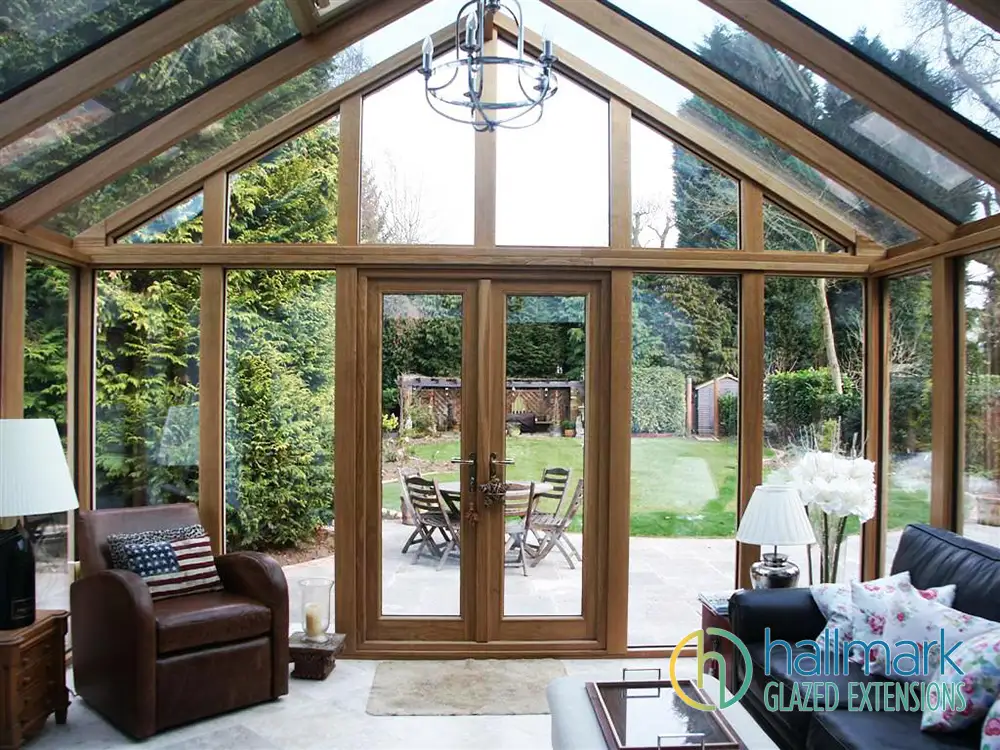
A conservatory is the most glass-focused option, often featuring:
Conservatories are ideal for garden-facing spaces, reading rooms, or areas where maximum light is the priority. However, without the right design and insulation, they can be more susceptible to seasonal temperature swings. Which is why high-spec glazing and roof vents are essential to ensure a usable room all year round.
Orangery
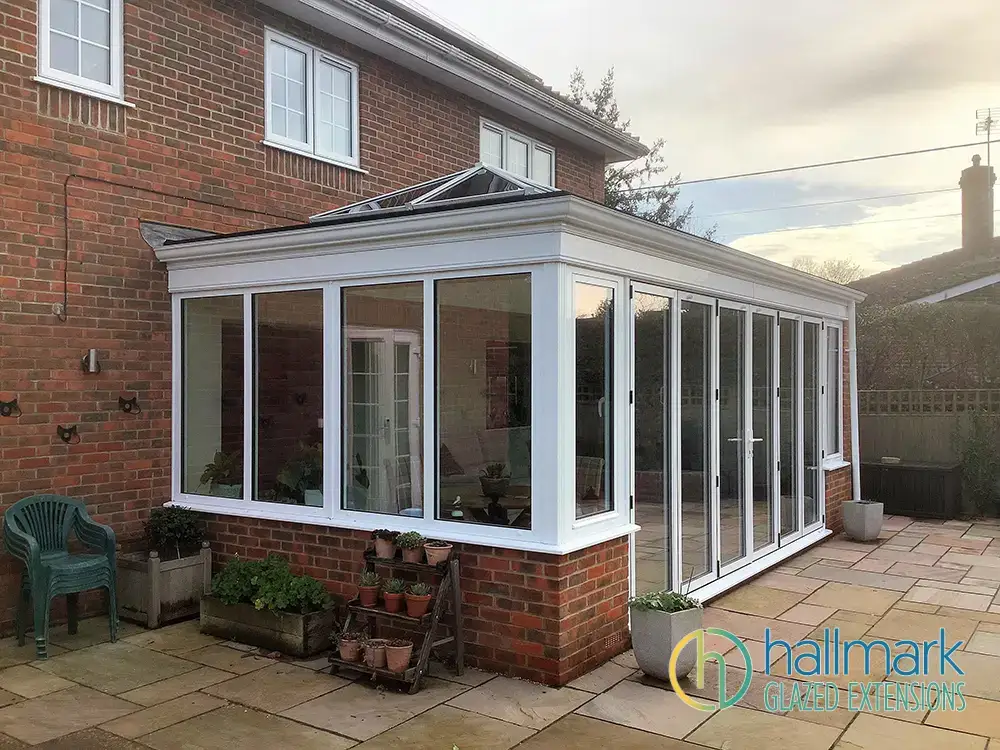
An orangery is a more substantial structure that blends the best features of a conservatory and a traditional extension. You’ll typically see:
This design provides excellent thermal performance and a more "room-like" atmosphere, making it ideal for open-plan kitchens, lounges, and all-year living spaces. Orangeries are also often more planning-permission friendly in conservation areas or when blending with period properties.
At Hallmark Glazed Extensions, we don’t start with a product; we start with your lifestyle, how you want to use the space, and what will complement your home best. Whether you choose a conservatory or an orangery, we guide you through the design, planning, and construction process to ensure the result is elegant, functional, and lasting.
2. Which is better for year-round use, a conservatory or an orangery?
Both can be enjoyed year-round, but when it comes to natural thermal performance, orangeries tend to have the edge. That’s because of their hybrid construction: a mix of solid walls, insulated columns, and a partially solid roof (often with a central glazed lantern) that naturally retains heat more effectively.
This makes orangeries particularly well suited to:
However, don’t rule out the modern conservatory. Advances in glazing and roof systems mean that today’s conservatories are a world away from the too-hot-in-summer, too-cold-in-winter stereotypes of the past. With the correct specification, you can now enjoy a conservatory that performs almost as well as a traditional extension. This adaptability ensures your comfort throughout the year, regardless of the season.
With the correct specification, you can now enjoy a conservatory that performs almost as well as a traditional extension:
Ultimately, it’s not about choosing one structure over the other; it’s about making wise design choices based on how you’ll use the space, the orientation of your home, and your energy efficiency goals. At Hallmark Glazed Extensions, we believe in empowering homeowners to make informed decisions, and we're here to help you assess all these factors and build a truly usable space, 365 days a year.
At Hallmark Glazed Extensions, we help you assess all of these factors and build a truly usable space, 365 days a year.
Look further into energy efficiency and comfort in glazed extensions here:
3. Can I build an orangery on a listed building or period property?
Adding a glazed extension to a listed building is not just a matter of aesthetics. It’s a legal and architectural responsibility that must respect the heritage, materials, and significance of the original structure. This requires a highly considered approach and the need to obtain Listed Building Consent from your local planning authority before any work can begin, even for seemingly minor changes.
You’ll need to obtain Listed Building Consent from your local planning authority before any work can begin, even for seemingly minor changes. The application must clearly demonstrate that the extension:
At Hallmark Glazed Extensions, our team of experts has delivered numerous bespoke orangeries and conservatories for Grade II-listed and heritage-designated properties across the South East and Home Counties. We collaborate closely with conservation officers, heritage consultants, and planners to ensure that every design meets planning requirements while delivering modern comfort and usability. You can trust our expertise to enhance the story of your home with sympathetic craftsmanship and design integrity.
We understand that it’s not just about “adding on,” but enhancing the story of the home, using sympathetic craftsmanship and design integrity.
For official guidance on extending listed properties, Historic England’s resource is a must-read:
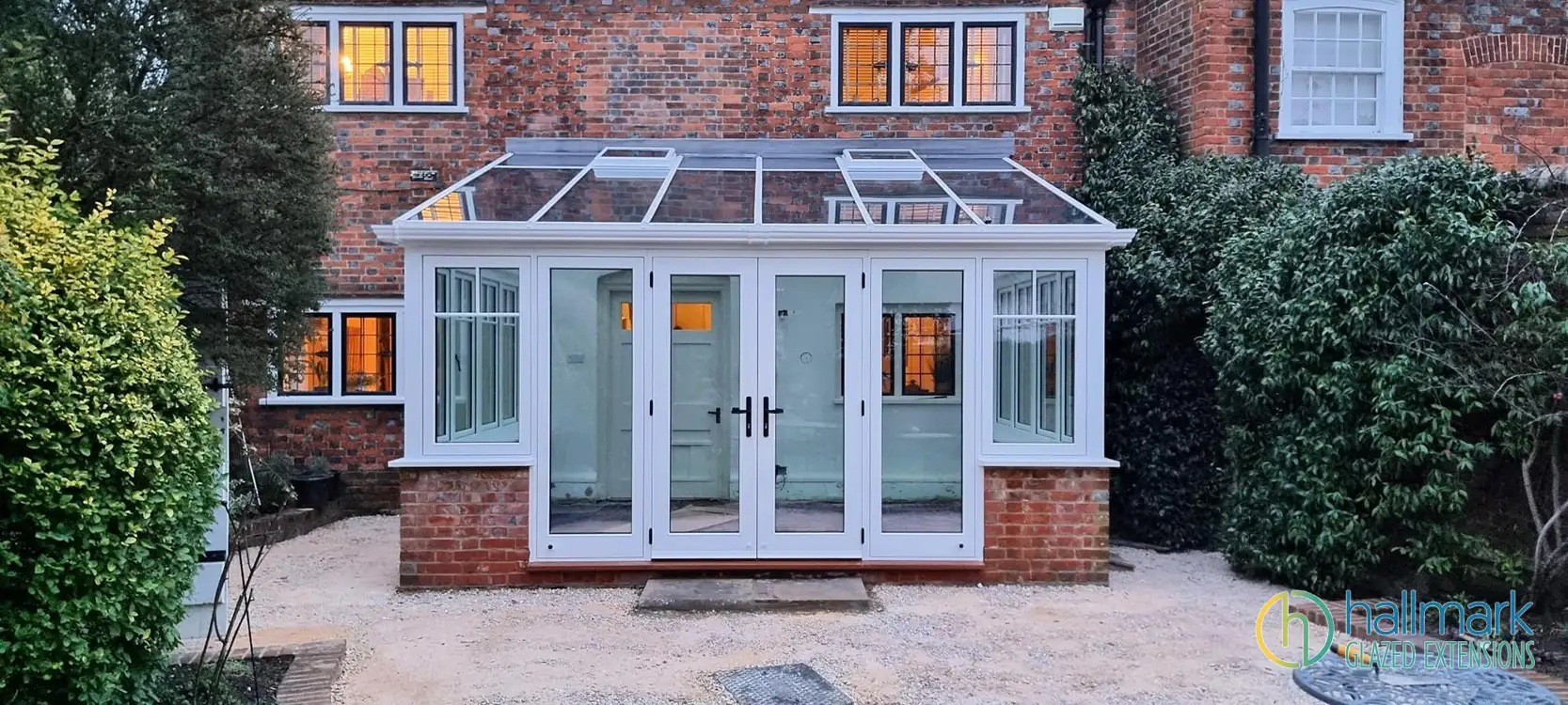
4. Is a glass roof or a solid roof better?
Both options offer distinct advantages, and the best choice depends on how you want the room to look, feel, and function throughout the year.
Here’s how they compare:
Glass Roofs
Glass roofs are a popular choice when the priority is natural light and a strong visual connection to the garden. They create a bright, airy atmosphere that feels expansive and uplifting.
Modern innovations mean you no longer have to worry about overheating or glare:
Glass roofs are ideal for garden rooms, dining areas, or spaces where you want to feel immersed in the outdoors.
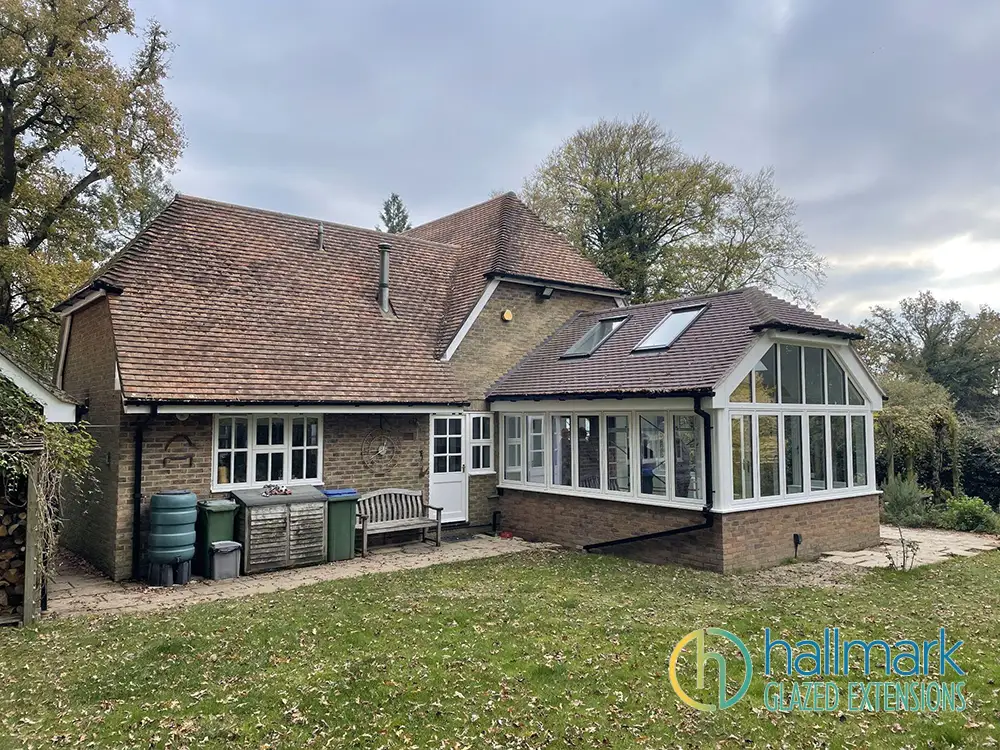
Solid or Hybrid Roofs
Solid roofs (often tiled or flat) provide a more enclosed, insulated feel, perfect if you want your extension to function like a traditional living room or year-round lounge.
Hybrid options, such as a solid roof with a glazed lantern or rooflight, offer the best of both worlds: improved thermal and acoustic insulation, along with a dramatic central light source that draws the eye upward.
These styles are often preferred for:
At Hallmark Glazed Extensions, we’ll discuss the pros and cons of each style, providing real-life examples and helping you select the roof structure that best suits your lifestyle, orientation, and planning constraints.
Explore the full breakdown of roof options here and decide what’s right for your project:
5. What’s the best material: uPVC, oak, hardwood or aluminium?
Each material has its strengths, and the right choice will depend on your property’s character, your aesthetic preferences, and how much maintenance you’re willing to take on.
Here’s a closer look at the pros and cons for each material:
At Hallmark Glazed Extensions, we help you weigh the visual impact, thermal performance, and maintenance needs of each material, ensuring your extension is not only beautiful but also perfectly aligned with your lifestyle and home.
Compare how different materials transform a space in our gallery of real homes:
6. How can I design a conservatory that complements the style of my house?
This is where great design makes all the difference. A well-integrated conservatory or orangery should appear as if it were always part of your home, not an afterthought. At Hallmark Glazed Extensions, we achieve this by paying close attention to every architectural detail, no matter how small.
Here’s how we ensure seamless integration:
We don’t use prefabricated templates. Every Hallmark glazed extension is designed from scratch around your property’s proportions, age, materials, and character, ensuring it enhances your home, not competes with it.
See real examples of how we’ve achieved architectural harmony on past projects:
7. Can I customise the roof and glass?
Yes, every Hallmark glazed extension is designed to suit your home, lifestyle, and preferences. We don’t believe in templates or “off-the-shelf” solutions. Instead, we help you design every detail to achieve the right balance of aesthetics, performance, and year-round usability.
Here’s what you can tailor:
We’ll guide you through all the options based on your home’s orientation, usage patterns, and planning context, so nothing is left to chance.
To see how different combinations of roof and glass can transform your space, explore our design ideas gallery:
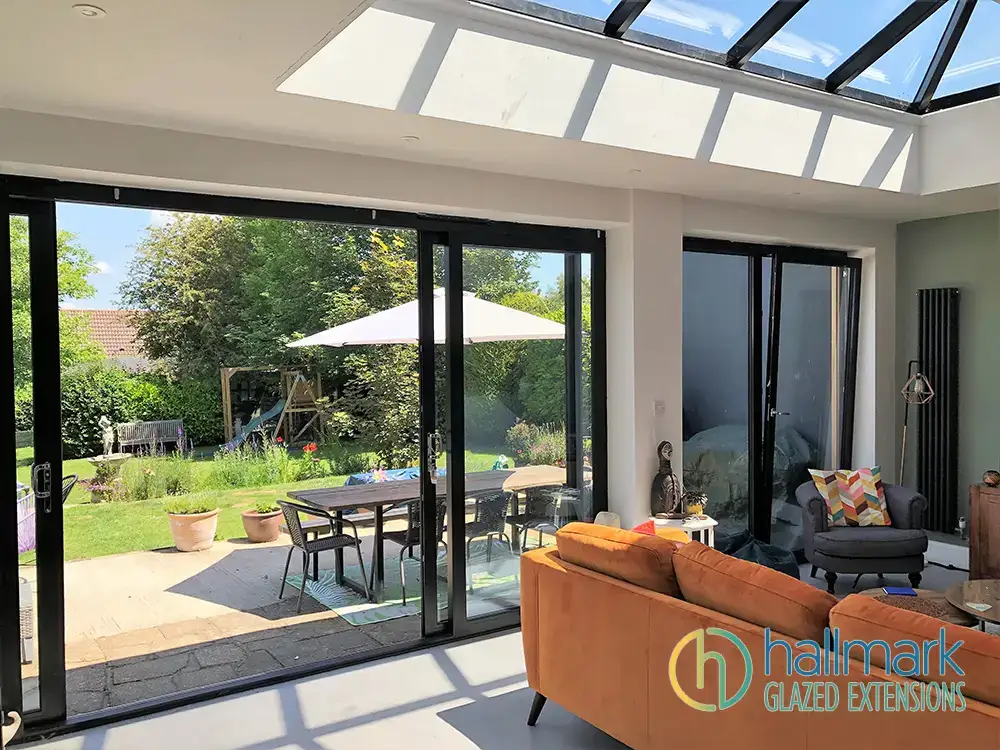
8. What’s the most energy-efficient glazing available?
Modern glazing has come a long way, playing a vital role in determining the comfort, sustainability, and cost-effectiveness of your new space. Gone are the days when large amounts of glass meant unbearable summer heat and icy winter chills.
When planning a glazed extension, look for these advanced glass technologies:
At Hallmark Glazed Extensions, we specify all glazing based on the orientation of your home, your desired comfort level, and your long-term energy efficiency goals. You’ll never be sold 'standard glass' that doesn’t fit your needs.
To explore the latest in energy-saving glazing and how it works, read this guide from the Energy Saving Trust:
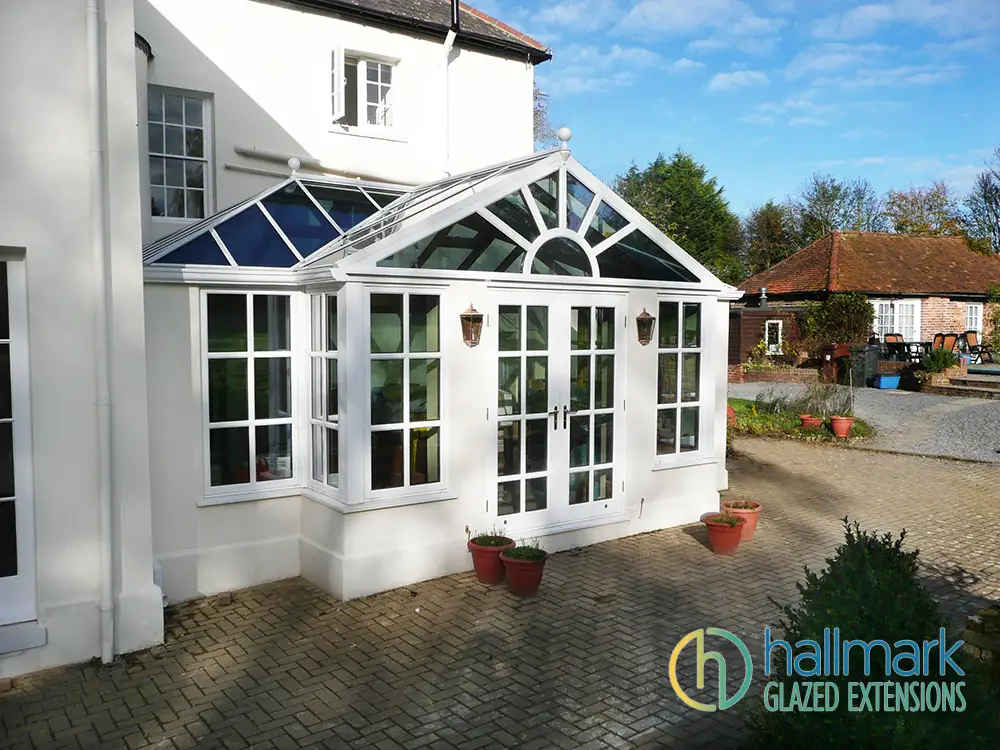
9. Do I need planning permission for a conservatory or orangery?
In many cases, no, especially if the design fits within permitted development rights. These government guidelines permit homeowners to add certain types of extensions without requiring a formal planning process.
However, you will need full planning permission if:
It’s also essential to check whether your home has had previous extensions, as this can affect what’s still permitted.
At Hallmark Glazed Extensions, we assess all of this at the very beginning of your project. You won’t be left guessing—we’ll tell you exactly what’s needed and manage any applications on your behalf, including submitting detailed drawings and handling correspondence with your local planning authority.
For a clear summary of permitted development rules and planning criteria, visit this helpful resource from the Planning Portal:
10. Can I build in a conservation area?
Yes, you can—but it requires a more sensitive and strategic approach. Properties in conservation areas are subject to stricter planning regulations to preserve the architectural and historical character of the neighbourhood. This means you’ll need full planning permission rather than relying on permitted development rights.
Design considerations are particularly important. Your glazed extension will need to:
At Hallmark Glazed Extensions, we’ve successfully designed and built numerous orangeries and conservatories in protected zones. Our team understands how to create elegant, timeless designs that enhance planning and add value to the property, rather than detracting from it.
We handle all aspects of the process, from initial design and planning submissions to liaising with local authorities and conservation officers, so you don’t have to navigate the red tape alone.
For more detailed guidance on planning in conservation areas, explore this helpful overview:
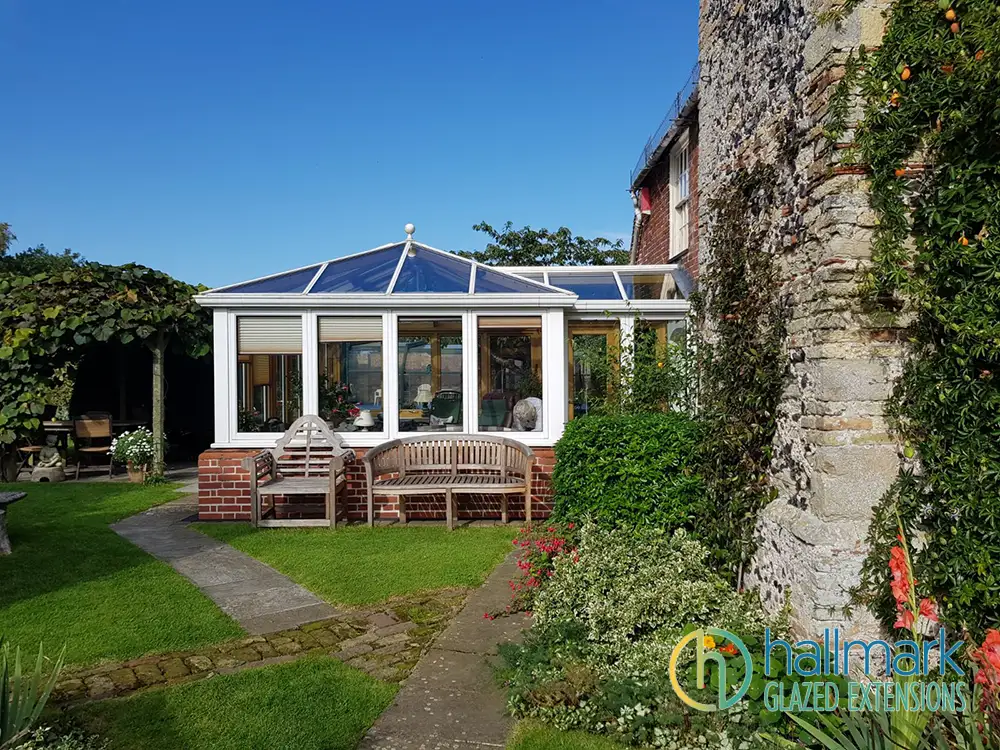
11. How big can I build without planning permission?
The good news is that many orangeries and conservatories fall under permitted development rights, meaning you might not need to apply for planning permission at all, provided specific rules are followed.
Under current guidelines, you can typically build:
These limits apply to most homes, but there are exceptions, such as if your property is listed, in a conservation area, or has had previous extensions.
That’s why, at Hallmark Glazed Extensions, we always start with a complimentary consultation and planning review. Our team handles all technical drawings, measurements, and, where necessary, submits applications on your behalf.
Check out our full guide to planning permission and what you can (and can’t) build under permitted development:
12. Will my builder handle planning and building regulations?
A good company won’t just design and build your extension—they’ll take care of the paperwork too. At Hallmark Glazed Extensions, we manage the entire process on your behalf, ensuring everything is legally compliant and stress-free from day one.
That includes:
This means fewer delays, no hidden surprises, and complete peace of mind.
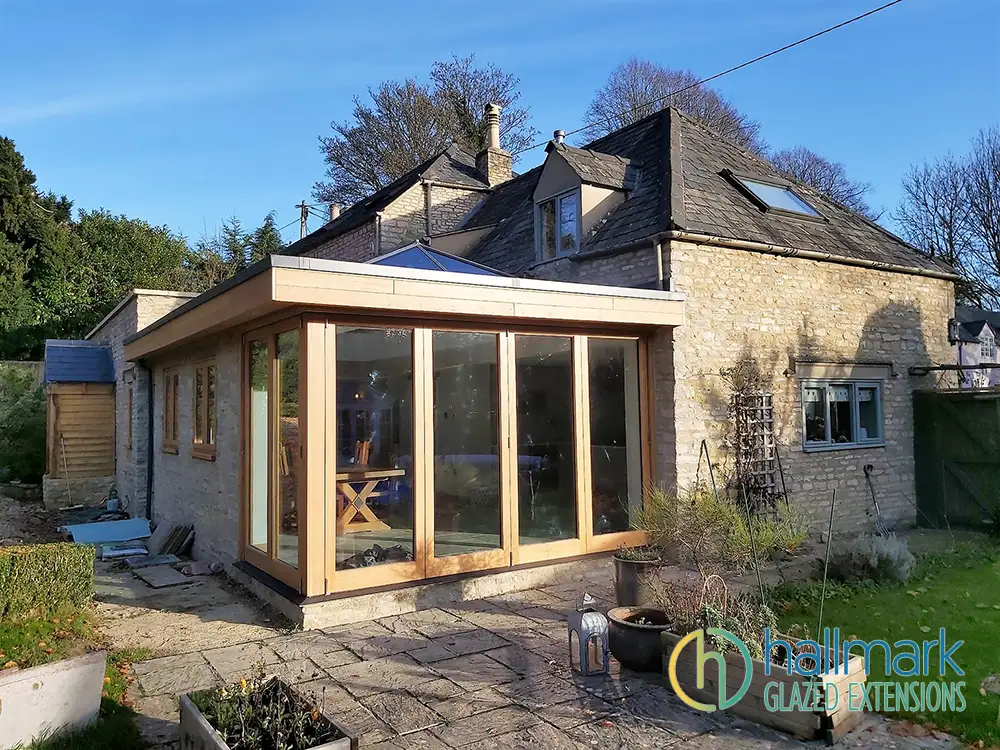
13. Can I create an open-plan kitchen with an orangery?
Absolutely, and it's one of the most in-demand design choices among homeowners today. An orangery is ideal for extending your kitchen into a generous, light-filled space that blends cooking, dining, and living into one social hub.
We regularly design open-plan kitchen orangeries that include:
It’s not just an add-on; it becomes the beating heart of your home.
Take a look at some of our recent open-plan orangery transformations:
14. What do most people use conservatories and orangeries for?
Gone are the days when conservatories were just sunny spots for the occasional cup of tea. Today’s orangeries and conservatories are fully functional living spaces, designed to meet the changing demands of modern family life.
Some of the most popular ways our clients are using their glazed extensions include:
Every Hallmark Glazed Extensions project begins with how you want to live, not just how many square metres you can add. We design spaces tailored to your lifestyle, goals, and future needs.
Explore how other homeowners have transformed their homes with purpose-led design:
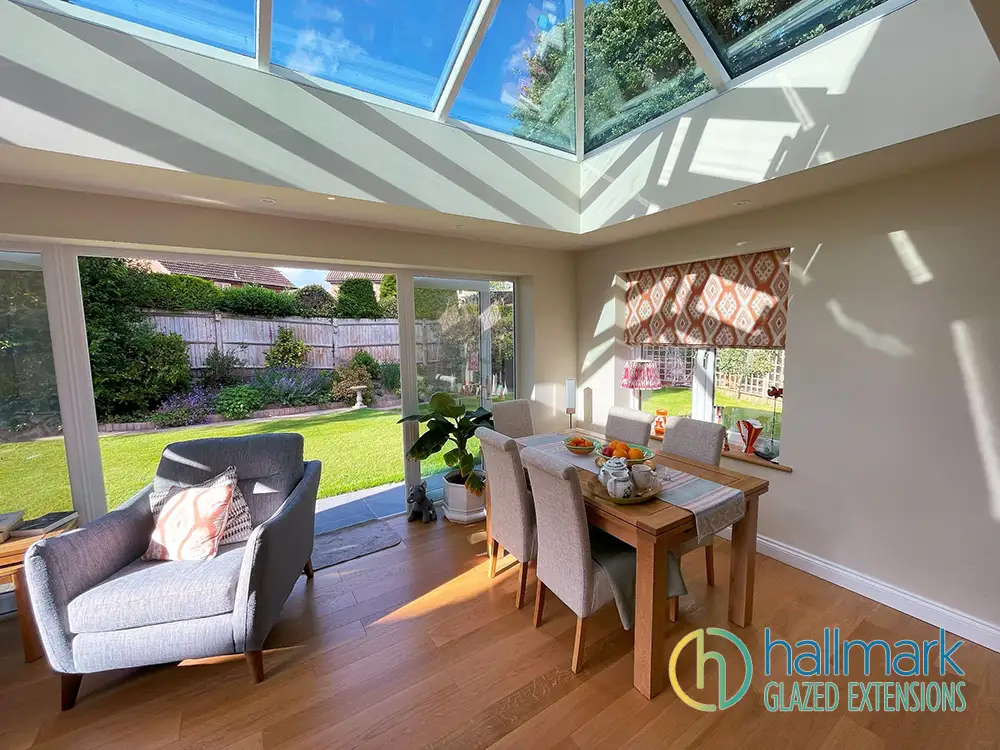
15. How do I connect a conservatory without losing wall space?
It’s a common concern and a solvable one. Many homeowners worry that linking a conservatory or orangery to their home will mean sacrificing too much wall space, storage, or structural support.
At Hallmark Glazed Extensions, we use advanced architectural framing and precision-engineered steels to create wide openings between the new room and the existing house, without compromising layout or stability.
This means you can:
Our designs are tailored to your home’s structure and how you use each room, not just to look good on paper.
Understand how we blend old and new seamlessly with this practical advice:
16. Are conservatories outdated in 2025?
Not at all, when they’re designed with the right materials and specifications. The days of draughty PVC structures and sweltering summer heat are a thing of the past. Today’s conservatories are refined, efficient, and highly desirable.
At Hallmark Glazed Extensions, we design contemporary conservatories that incorporate:
The result? A stylish, usable space that adds value, not a dated bolt-on.
Take a look at the most relevant conservatory trends for modern living:
17. How much does an orangery or conservatory cost per m²?
It depends on what’s being built. Factors such as design, size, frame materials, glazing performance, roof structure, insulation levels, access, and even property type all influence the final cost.
For example, a simple aluminium conservatory with a glass roof will cost significantly less per square metre than a fully insulated oak-framed orangery with underfloor heating and structural steelwork.
We don’t offer one-size-fits-all pricing because no two Hallmark Glazed Extensions projects are alike, but we do provide clear, fixed quotations after a tailored design consultation, so you know exactly what’s involved.
For a detailed guide on what affects glazed extension pricing, read our recent breakdown here:
A Comprehensive Guide to Understanding Average Glazed Extension Build Costs Per Square Metre in 2025
Any homeowner enjoys the excitement of creating a space that enhances their home, such as
18. Can I reduce costs without compromising quality?
Yes, and it’s something we help clients do every day. A well-designed orangery or conservatory doesn’t have to break the bank. The key is knowing where you can simplify, without sacrificing performance or visual impact.
Here are innovative ways to manage costs:
At Hallmark Glazed Extensions, we work with you to strike a balance between ambition and practicality, helping you focus your budget on areas that deliver real, long-term value.
Explore more advice on balancing budget and beauty here:
19. Do glazed extensions add property value?
Yes, when designed well, a glazed extension can significantly increase the appeal, function, and overall value of your home. The key is creating a space that isn’t just beautiful, but truly liveable all year round.
Estate agents and property experts estimate that a high-quality orangery or conservatory can increase your home's value by 7% to 10%, particularly if it adds usable floor area like a dining space, family room, or kitchen extension.
But it’s not just about square footage. Buyers are increasingly drawn to:
Unlike off-the-shelf add-ons, a bespoke Hallmark glazed extension is tailored to both your lifestyle and the property’s long-term value, making it a solid investment, not just a home improvement.
For a deeper look at how glazed extensions impact property prices, this guide from Ideal Home is worth a read:
20. How do I stop it from getting too hot or too cold?
This is one of the most important considerations when planning a glazed extension, and one that hinges on smart, specification-led design.
At Hallmark Glazed Extensions, we combine multiple systems to ensure your orangery or conservatory is usable and comfortable 365 days a year. Here’s how we do it:
It’s this combination, not just a single product, that makes your space feel like a valid extension of the home, rather than an outbuilding that’s only usable in mild weather.
Discover more ways to maintain a comfortable temperature year-round:
21. What is hup!, and how is it different from a traditional extension?
hup! is a revolutionary building system designed to deliver faster, warmer, and more sustainable extensions. Instead of relying on heavy, wet conventional construction methods (like bricklaying or blockwork), hup! utilises a high-performance, pre-fabricated wall system featuring built-in insulation, structural integrity, and finish-ready surfaces.
Think of it as the more innovative, quicker way to build your dream conservatory or orangery, without compromising on quality or aesthetics.
Here’s why homeowners are choosing hup! over traditional builds:
At Hallmark Glazed Extensions, we’re one of the select few expert installers of the hup! system in the UK. That means you get the benefit of our bespoke design skills combined with cutting-edge construction technology, for an extension that’s stunning, fast, and future-proof.
Explore how hup! could transform your home, and why it’s ideal for modern families and busy lives:
Ready to Get Started?
You don’t need to wade through endless internet searches. Whether you're looking to build a modern kitchen orangery or a warm, multi-use garden room, we’ll help you get it right, from planning to making.
📞 Call us on 01323 671007
🖱️ Book your free consultation
📂 Browse more projects
💡 Visit the Advice Hub


